
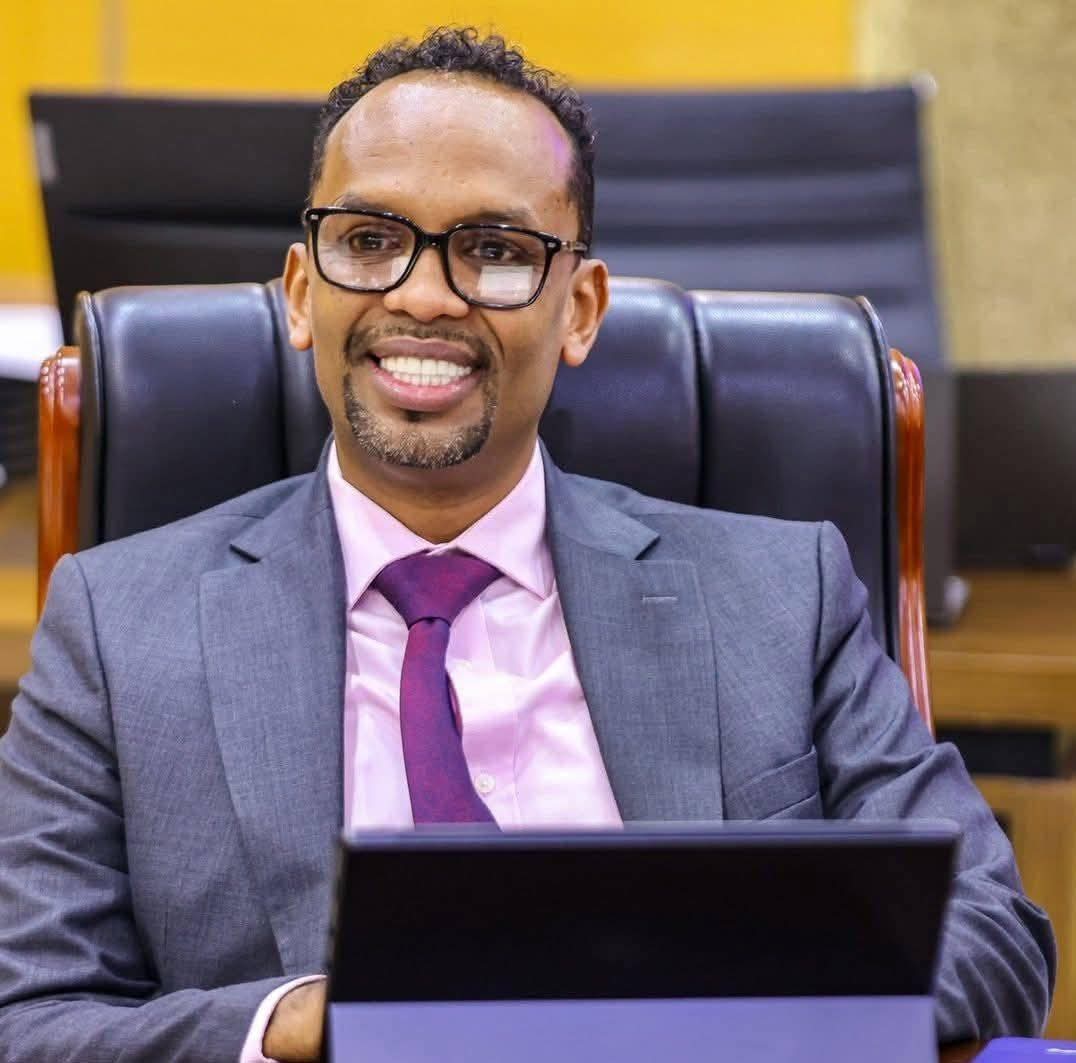

By Abdifatah Abdinur.
State Minister of Puntland Presidency
By: Abdifatah Abdinur
State Minister of the Presidency.
Puntland State of Somalia.
Introduction:-
Somalia stands at a dangerous crossroads. At a time when the country urgently needs unity, institutional trust, and adherence to constitutional order, the Federal Government is pressing forward with an election process it claims is based on the principle of “one person, one vote.” Yet by every constitutional, legal, and democratic measure, the process falls far short of the minimum standards required for credibility. Rather than moving Somalia closer to democratic governance, the model being advanced in Mogadishu risks fracturing the fragile political consensus that Somalis and international partners have spent two decades trying to build.
The government’s determination to proceed with a unilateral and geographically restricted electoral process dominated politically and institutionally by the ruling party has already deepened widespread mistrust. Federal Member States, opposition groups, civil society organizations, and significant segments of the public have openly questioned the legality, constitutionality, and legitimacy of the approach. Their concerns are not speculative; they stem from lived experience in a country still recovering from conflict, state collapse, and the unresolved tensions between the federal center and the regions. At the core of the dispute lies an irrefutable fact an election cannot be described as “one person, one vote” when the electorate is unknown, unverified, and in many cases registered under coercive or irregular procedures. Numerous reports detail instances of registration conducted under intimidation, bribery, and heavy-handed security tactics. The use of state power to influence who participates and who does not violates the fundamental democratic principle that voter participation must be voluntary, transparent, and free from state interference. When a government shapes the voter registry in its own favor, it is not practicing democracy, it is engineering the outcome.
Equally troubling is the narrow geographic scope of the electoral process. A true one-person-one-vote election is inherently national. It must include the full territory of the republic and every eligible citizen, regardless of region or political affiliation. Instead, the current model excludes millions of Somali citizens by restricting participation to Mogadishu. An election that sidelines the majority of the population while claiming national legitimacy is contradictory, misleading, and ultimately inflammatory. It reinforces long-standing fears of political domination by the center at the expense of the regions fears that have shaped Somali politics for decades and continue to influence relations within the federal system.
Compounding these concerns is the absence of a neutral and representative electoral management body. The electoral commission overseeing the process has been widely criticized for its partisan composition and its lack of independence. In a properly functioning democracy, an electoral commission serves as a safeguard against abuses of power. It ensures equal access for all political actors, protects the integrity of the process, and maintains public confidence. In Somalia’s case, the commission has instead been perceived as an extension of the ruling party. A partisan electoral body undermines the most basic requirements of fairness and risks transforming the entire exercise into a mechanism for consolidating power rather than enabling democratic competition. The contradictions are glaring. The Federal Government asserts that several Federal Member States are sufficiently secure to participate in a nationwide electoral process. Yet at the same time, opposition parties and critical voices have been prevented from campaigning freely in those same regions. When the government claims an environment is secure enough for elections but restricts political freedoms in those territories, the inconsistency exposes the political motivations behind the entire exercise.
- A Disputed Election Risks Deep Political Fragmentation
If the Federal Government continues on this trajectory, Somalia risks entering a period of serious political turmoil, institutional paralysis, and widespread instability. The consequences could be severe and long-lasting. First, the country faces an acute risk of political fragmentation. Federal Member States already feel marginalized by an electoral model designed and implemented exclusively in the capital. Moving forward without broad national consensus could prompt boycotts, parallel political processes, or further deterioration of relations between Mogadishu and the regions. In a federal system as fragile as Somalia’s, any intensification of mistrust could destabilize the entire political architecture and potentially encourage centrifugal tendencies.
Second, the legitimacy of the Federal Government itself hangs in the balance. A government elected through a contested and exclusionary process will struggle to command public confidence or international recognition. Legitimacy is the currency of governance. Without it, institutions lose authority, security forces splinter along political loyalties, and political actors seek influence through extra-constitutional means. Somalia cannot afford a return to an era where political disputes were settled through violence rather than law.
Third, the security implications of a disputed election are profound. History across Africa and beyond shows that contested elections in fragile states often lead to civil unrest or violent conflict. Somalia is no exception. If large sections of the population perceive the process as rigged or imposed, tensions in Mogadishu and other regions could escalate quickly. Clashes between security forces and opposition groups, clan-based mobilization, or widespread protests are all conceivable scenarios. A single spark could unravel years of hard-won progress.
Fourth, the trust painstakingly built with international partners is at serious risk. For more than two decades, Somalia’s international allies have invested political, financial, and humanitarian resources to help rebuild institutions, strengthen governance, and support state-building. Their expectations are clear: elections must be transparent, inclusive, and constitutional.
A flawed electoral process would erode that trust, jeopardize international support, and potentially disrupt cooperation on critical issues such as debt relief, security transitions, and development assistance.Fifth, the consequences for state-building could be catastrophic. Somalia’s institutions judiciary, parliament, oversight bodies remain fragile and vulnerable to political influence. A disputed election would place these institutions under intense strain. Courts could be weaponized for political battles. Commissions could face delegitimization. Parliament could fracture along competing claims of constitutional authority. Recovering from such a setback could take years, if not decades.
- The Only Way Forward Is Constitutionalism and National Consensus
Somalia has reached a point where the path forward must be anchored in constitutionalism, national consensus, and genuine dialogue. No shortcut or unilateral decision can substitute for a credible electoral process that represents the will of the entire nation. What Somalia needs is a comprehensive national political dialogue involving all Federal Member States, former presidents and prime ministers at both federal and state levels, key political stakeholders, candidates, and civil society actors. The country must agree on a clear legal framework governing elections, establish a neutral and inclusive electoral commission, and design a realistic timeline for a nationwide one-person-one-vote system not a Mogadishu-only experiment disguised as national democracy. Political rights must be guaranteed for all parties across all regions. Participation must be free from coercion. Voters must be registered transparently and nationwide. And no institution should hold unchecked power over the process.
Somalia has come too far to gamble with its future. A disputed election is a direct path to instability, institutional collapse, and renewed conflict. A consensual, constitutional, and inclusive electoral roadmap is the only pathway that offers hope for lasting stability, legitimate governance, and the preservation of the federal project. The country cannot afford anything less.