

By:-Dr. Mohamud Ulusow.
Somalia: The Hidden Hand Behind the AU Peace and Security Council’s Endorsement of Sham Elections and Disregard for the Crisis of Constitutional Legitimacy
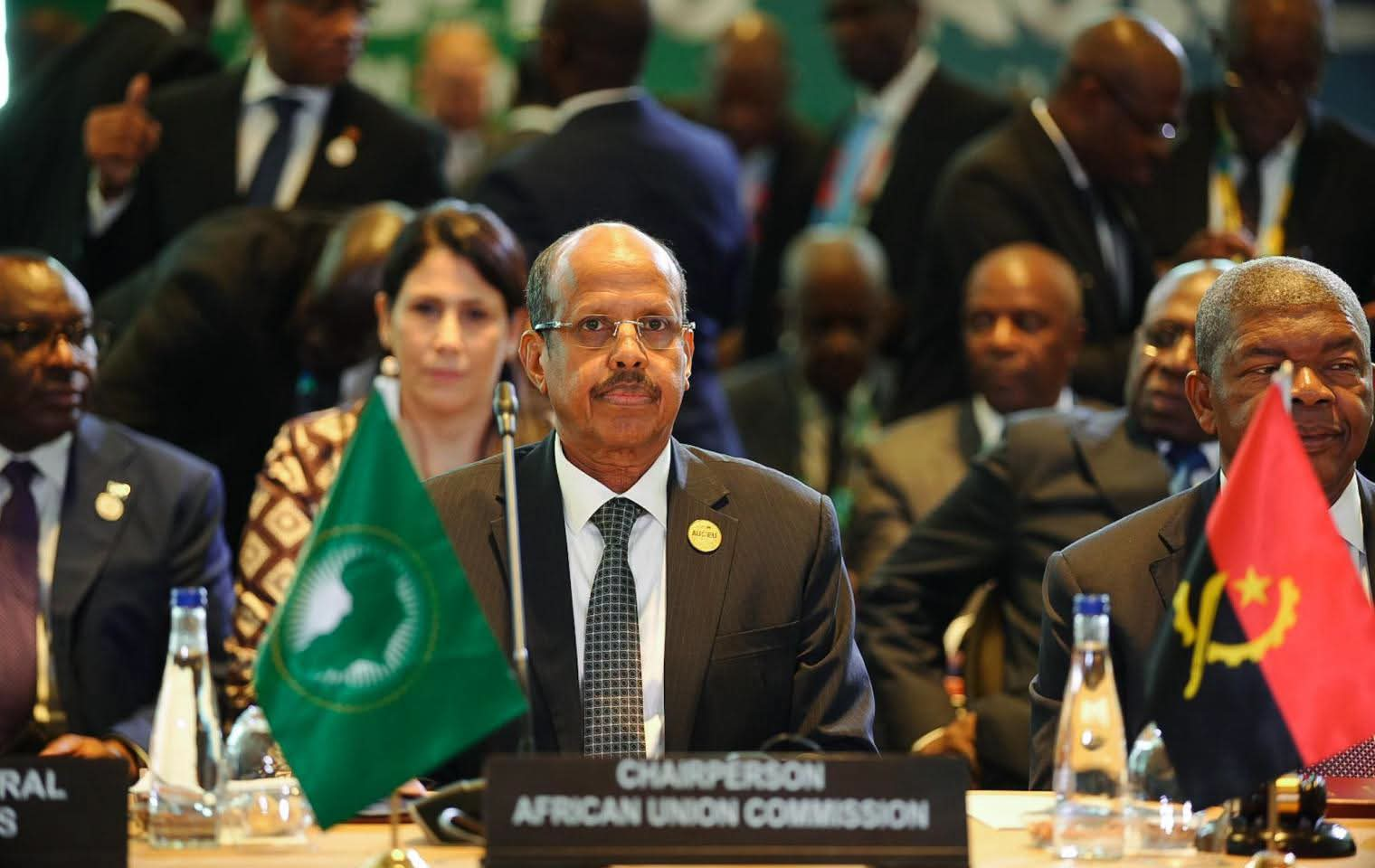
The communiqué adopted by the Peace and Security Council (PSC) of the African Union (AU) at its 1380th meeting on 25 November 2026 exposes the contradictions and confusion surrounding the Council’s assessment of Somalia’s political and security crises.
The Council appears to be struggling to explain the disappointing outcome of nearly two decades of AU peace support operations—AMISOM, ATMIS and AUSSOM—and to secure international funding for future security arrangements beyond 2027. The communiqué acknowledges the gravity of Somalia’s security threats, the fragility of previous gains and the country’s continued dependence on substantial international financial, military and logistical support.
Nevertheless, paragraph 12 of the communiqué makes the following astonishing statement:
“Commends the historic milestone of holding the first direct local elections across various regions of Somalia, and welcomes the constructive engagements by H.E. President Hassan Sheikh Mohamud with all Somali stakeholders, including political parties and civil society actors, as part of stabilization efforts, particularly in liberated areas and in preparation for national elections scheduled for 2027.”
This statement is grossly misleading, detached from political realities and damaging to the credibility, impartiality and institutional competence of the PSC. It runs counter to the principles enshrined in the African Charter on Democracy, Elections and Governance and Articles 3(f) and 7(1)(m) of the Protocol establishing the PSC. It also disregards Hassan Sheikh Mohamud’s lack of constitutional legitimacy to continue exercising presidential authority following the expiration of his mandate.
The unilateral electoral process initiated by the Federal Government in Mogadishu on 25 December 2025 and subsequently imposed in Southwest, Hirshabelle and Galmudug represents indisputably a sham democratic exercise designed to consolidate political power rather than empower the Somali people. Nearly one year after the Mogadishu elections, there is little evidence of meaningful democratic transformation, while the electoral processes in the three federal member states have aggravated political divisions, provoked armed confrontations and undermined national cohesion.
In Galmudug, the Supreme Court annulled the original elections on 24 August 2026 for violations of constitutional and electoral requirements. However, the Federal Government’s Electoral Commission proceeded to rerun the sham elections without correcting the widespread violations identified in the Supreme Court’s ruling. Towfiq, the political organization that successfully challenged the original elections, was deceptively excluded from the rerun, while Hassan Sheikh Mohamud’s party secured approximately 80 percent of the seats. These electoral disputes have diverted national attention and security resources from the fight against Al-Shabaab, creating opportunities for the terrorist organization to exploit Somalia’s internal divisions.
Why did the PSC fail to mention the deadly clashes on 19 November 2026 between Djiboutian troops serving under AUSSOM in Beledweyne, Hiiraan, and local Hawadle resistance forces opposed to the disputed Hirshabelle electoral process?
Media reports documented deaths and injuries resulting from the confrontation and indicated that local forces had taken control of Ugaas Khaliif Airport. Following the incident, the Somali Civil Aviation Authority suspended all flights to and from Beledweyne Airport, citing security concerns. In general, such restrictions risk becoming an instrument of collective punishment and coercion designed to force the local population into political submission.
Similarly, why did the communiqué ignore the continuing armed confrontations between federal government-backed forces and forces loyal to the ousted Southwest State President, Abdiaziz Hassan Mohamed Laftagareen? These confrontations have resulted in casualties, destruction, mass displacement and widespread suffering. On 17 November 2026, the International Committee of the Red Cross reported that fighting in Southwest had displaced more than 18,000 people.
These are among the devastating consequences of the Federal Government’s unilateral political and electoral agenda that the PSC inexplicably commends as a historic democratic milestone and a contribution to stabilization.
These conflicts have also diverted national attention and security resources from the fight against Al-Shabaab, creating opportunities for the terrorist organization to exploit Somalia’s internal divisions.
The omission of these developments is particularly disturbing given that the PSC meeting was specifically convened to assess AUSSOM’s activities and Somalia’s security situation. How can the Council credibly assess the performance of AUSSOM while ignoring an armed confrontation involving its own peacekeepers and the political circumstances that precipitated it?
Equally disturbing is the PSC’s praise of Hassan Sheikh Mohamud’s (HSM) purportedly constructive engagement with all Somali stakeholders, while completely ignoring Somalia’s fundamental crisis of constitutional legitimacy. Notably, the communiqué makes no explicit reference to engagement with the political opposition, including the leadership of Puntland and Jubbaland—key stakeholders whose participation is indispensable to reaching a credible and broadly agreed political settlement.
On 5 November 2026, the Supreme Court affirmed that the mandates of the Federal Parliament and the President had expired on 14 April and 15 May 2026, respectively, and ordered political stakeholders to agree on an electoral framework within 30 days and hold elections within 90 days. By welcoming preparations for the unilateral elections scheduled for April and May 2027 without acknowledging the Supreme Court’s ruling or the absence of a politically agreed electoral framework, the PSC lends political legitimacy to the unconstitutional retention of power.
The wording, timing, selective omissions and political implications of paragraph 12 raise serious suspicions about a hidden foreign hand behind its insertion. Many informed observers strongly suspect that a foreign government pursuing its own geopolitical interests in Somalia may have mischievously influenced the inclusion of this deceptive political assessment.
Such manipulation could serve several purposes: legitimizing HSM’s continued unlawful exercise of power, sowing confusion within the international community, fomenting rivalries among Somalia’s foreign partners and obstructing coordinated international mediation. Particularly troubling is the possibility that foreign autocratic powers are seeking to deny the Somali people the opportunity to establish a genuine democratic system of governance, preferring a compliant authoritarian ruler who serves their geopolitical, economic and security interests without constitutional constraints or public accountability.
The PSC should not allow itself to become an instrument of such foreign political manipulation. Regardless of who may have engineered the inclusion of paragraph 12, the Council bears full institutional responsibility for its adoption, omissions and consequences.
The statement undermines the mediation efforts of President Yoweri Museveni of Uganda and the international quartet—the United States, the United Kingdom, Türkiye and the European Union—to facilitate a negotiated settlement between HSM and the Somali opposition, including federal member state leaders, on the conduct of elections in compliance with the Supreme Court’s ruling.
Rather than contributing to stabilization, the PSC’s statement risks emboldening HSM’s intransigence, deepening political polarization, aggravating armed confrontations and undermining efforts to restore constitutional legitimacy. The PSC must urgently retract paragraph 12, disclose the circumstances surrounding its inclusion, reaffirm its commitment to constitutional legitimacy, impartiality and democratic governance, and declare its determination not to become a political spoiler in Somalia’s crisis.
The African Union cannot credibly pursue Somalia’s stabilization while legitimizing the political practices responsible for its destabilization. Nor should it allow the aspirations of the Somali people for democratic governance to become subordinate to the geopolitical ambitions of foreign powers.
Dr. Mohamud Ulusow