

SUNDAY SEPTEMBER 03 2023
The two-day tripartite talks involving Ethiopia, Egypt, and Sudan in Cairo this week, over the controversial Nile dam, ended in a stalemate. But the three countries have scheduled a fresh round in September in Addis Ababa.
After the session in Egypt, it turned out Egypt and Ethiopia have not climbed down from their irreducible minimums, making it a slim chance that the next talks will produce any positive results.
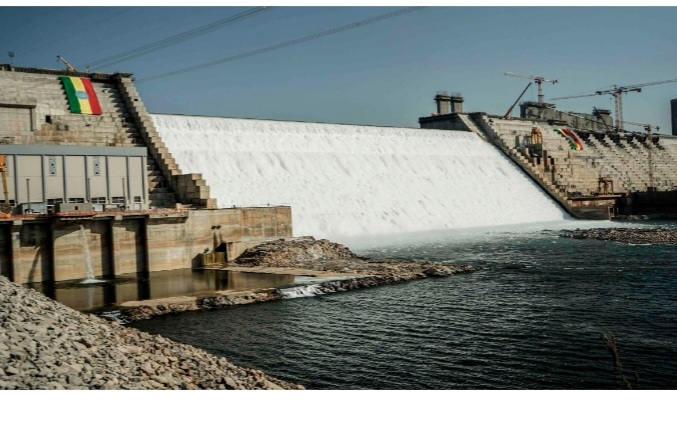
The talks largely centred on how to fill the Grand Ethiopian Renaissance Dam (Gerd) on the Blue Nile in Ethiopia.
In a statement to the media, Mohamed Ghanem, the spokesperson for Egypt’s Irrigation and Water Resources Ministry, said Ethiopia’s stance remains unchanged and negotiations have not brought anything new.
Cairo maintains that their colonial of 1929 and 1959 Anglo-Egyptian agreements that gave them the veto powers must be respected. This is despite the 2010 Nile Basin Cooperative Frame Agreement (CFA) that gave upstream countries the power to share Nile waters.
Ethiopia on the other hand argues that its Blue Nile contributes over 80 percent of the Nile waters and does not need permission to use its resources to provide power, irrigation, and drinking water to its people.
In fact, it says the dam released the water back in the Nile once electricity is generated, in the end.
A member of the Ethiopian Gerd Negotiation team, Yilma Seleshi said Sudan and Egypt are keen on having a water-sharing agreement rather than handling the specific cases related to the Gerd. But Prof Seleshi says that Ethiopia is not willing to sign an agreement that will compromise the development of future generations.
Observers were optimistic that the recent inclusion of the two countries into the membership of Brics+6 could open doors for cordial negotiations over the controversial Gerd that has been suspended for the last two years.
This view was reinforced by the mutual agreement last month between Egyptian President al-Sisi and Ethiopian Prime Minister Dr Abiy resolved, to reach an amicable solution within four months.
Dr. Abiy told parliament that the filling of the dam will be postponed until September as part of Ethiopia’s commitment to addressing the concerns of lower riparian nations, including South Sudan, Sudan, and Egypt.
“This year’s filling will be done differently from the previous three rounds by carrying out the filling in such a way as to alleviate the concerns of the neighboring people,” he told parliament.
Despite concession from Ethiopia, Egypt is still not convinced that Addis Ababa will keep its word given that Addis Ababa has always argued that it has the natural right to use its resources for the benefit of its people.
Egypt is demanding a binding agreement having submitted a technical report which takes into account the interests of Egypt, Sudan, and Ethiopia. However, Ethiopia says any agreement should be advisory and should not create a situation where outsiders are dictating how they should use their natural resources.
The previous round of negotiations to resolve the Gerd dispute, which was sponsored by the African Union, broke down in April 2021 because the countries could not come to an agreement on how to mitigate droughts, operate the dam, and settle future disputes, among other things. A second attempt that the US helped facilitate was also abandoned in February 2020 without success.
The 1959 agreement allocated nearly 90 percent of the Nile waters to Egypt and Sudan, with Egypt taking 55.5 billion cubic meters annually while Sudan was allocated 18.5 billion cubic meters per year.
But Article 14 (b) of the 2010 CFA, which involved 11 riparian countries, allowed other Nile Basin countries to do projects along the river Nile.
Egypt and Sudan are yet to sign the agreement 13 years on, over this provision, and want Article 14 (b) to read that the use “not to adversely affect the water security and current uses and rights of any other Nile Basin State”.
IDILNEWS.